Concert photography is one of the most technically demanding fields, where ever-changing coloured stage lights meet constant motion. The goal is to carry not only the artist but also the energy of the moment and the emotion of the crowd into the frame. The "first three songs" rule often applies, so the best moments must be caught quickly.
Working with Stage Light
Because of low light, a wide aperture (f/2.8 or faster), high ISO and a shutter of at least 1/250 are critical to freeze movement. Waiting for moments when light hits the artist’s face yields dramatic frames. Continuous focus and burst shooting increase the odds of not missing the right instant.
Camera and Lens Equipment
Fast aperture lenses — f/2.8 constant zoom or f/1.4–f/1.8 primes — are essential in low light. Full-frame bodies with strong high-ISO performance handle dark stages well. A 70–200 mm telephoto covers both wide stage shots and tight close-ups. Fast SD cards and a second card slot for backup are indispensable. Press passes may restrict certain cameras; a compact mirrorless is more practical at cultural festivals.
Position and Pit Rules
Pit access at major tours requires a press ticket or photo credential. Most events allow shooting during the first three songs — use that time wisely. Build rapport with the stage manager or crew; a courteous photographer gets invited back. Without a pit, side wings and elevated positions offer alternative angles. Never obstruct guests or security personnel.
Capturing Crowd and Atmosphere
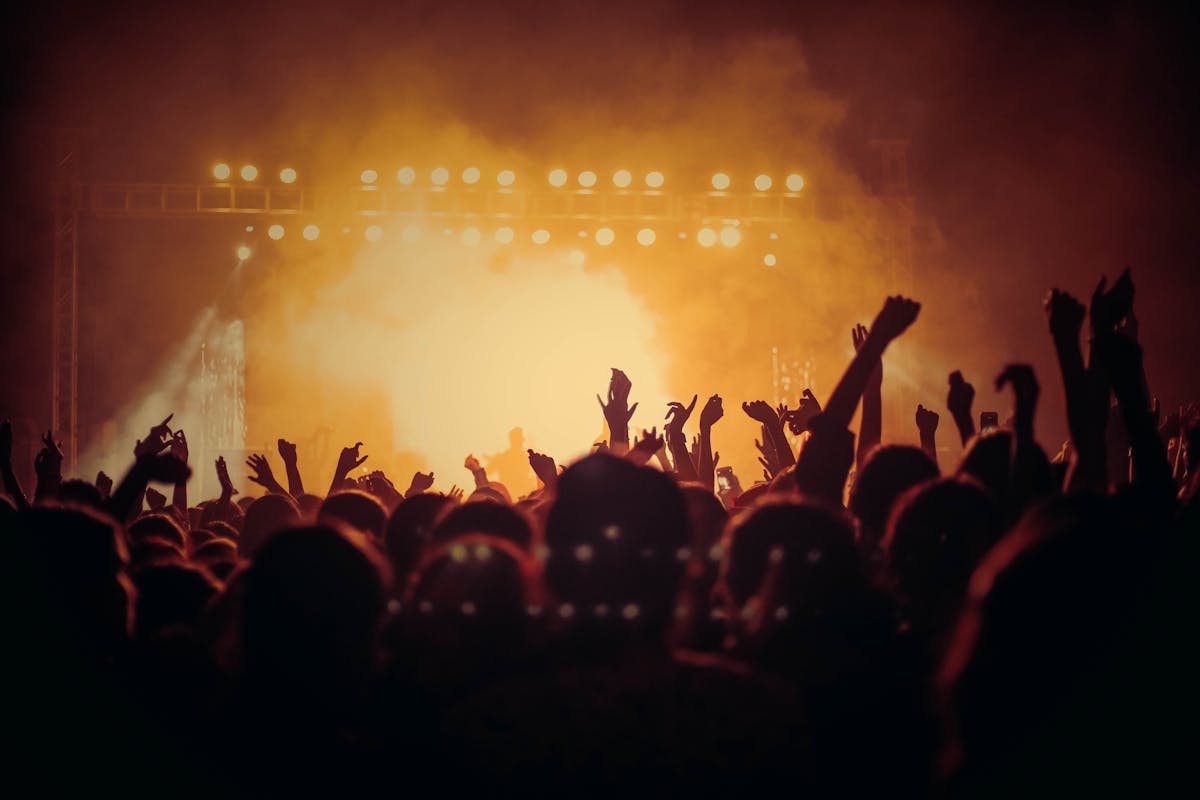
Capture the moment, not just the artist: raised hands, facial expressions and stage lights tell the story. Wide shots merging crowd and stage create powerful narratives. Crowd reactions and emotional moments sometimes get more shares than artist portraits. From inside the crowd, keep backgrounds simple; colour bursts can distract.
Post-Processing Low-Light Images
Lightroom's Denoise AI or DxO DeepPRIME XD dramatically reduces high-ISO grain. Fix colour noise first, then address luminance. Stage lighting colour temperature shifts constantly; tone each shot individually. Lifting shadows reveals face details — do not overdo it. Dramatic contrast creates a focal point amid chaos.
Building a Music Photography Portfolio
Add genre diversity to your portfolio: rock, jazz, electronic and acoustic shows feel different. Ten strong frames beat a hundred mediocre ones. Newspaper and music-media sites may offer unpaid editorial work — it builds clips and credibility. Instagram and Flickr groups are strong discovery channels for music photographers. A consistent colour story strengthens portfolio aesthetics.
Working with Labels and Artists
Producing content for artist and label social media can start an ongoing portfolio relationship. Press kit photos and tour posters are regular music photographer work. Keep rights clear: if the artist intends commercial use, charge a licensing fee. Credibility comes from references; on-time delivery and technical quality decide everything at first contact.
Photostorio: On Photostorio you can compare specialist photographers, studios and models, browse their portfolios and book online.
','rehber','concert photography, music, stage, events','Concert & Music Photography Guide 2026 | Photostorio